
Walking out of a dental clinic in Sydney, London, or New York with a treatment plan in your hand can feel like a punch to the gut. When the quote for a full mouth of implants or a set of veneers rivals the down payment on a house, panic sets in. I have spoken with patients who genuinely thought they would just have to live with failing teeth because the local prices were entirely out of reach.
That financial reality is exactly why the global dental tourism market is exploding. People are tired of being priced out of basic confidence and health. Valued at $7.71 billion in 2024, this industry is projected to reach an estimated $36.43 billion by 2034. Southeast Asia is the undeniable hub for this movement, and Vietnam is rapidly becoming the premier destination for high-end cosmetic restorations.
In the past, traveling abroad for medical care was mostly reserved for life-saving surgeries. Now, it is about choice. Patients from the US, UK, and Australia are bypassing their local providers. They aren't just looking for a discount. They want world-class clinical results, elite technology, and luxury patient support. Vietnam delivers exactly that, offering top-tier procedures like full-arch implants and advanced veneers for a fraction of the Western cost. And with specialized medical tourism agencies like HealthGoVietnam managing every detail, the process is incredibly smooth.
Why Vietnam is the smart choice for your teeth
The idea of flying across the world for medical work requires a massive amount of trust. You might picture outdated equipment or sketchy hygiene standards. The reality of modern Vietnam could not be further from that outdated stereotype.
International clinical standards
The foundation of dental tourism in Vietnam is a strict adherence to global clinical standards. The country's top dental hospitals and cosmetic clinics actively maintain accreditations from globally recognized bodies like Joint Commission International (JCI) and the International Organization for Standardization (ISO). JCI is the global gold standard for healthcare. It means the clinic follows the strictest possible protocols for patient safety, infection control, and risk management.
The dentists working in these elite facilities are world-class. A huge percentage of the specialists leading implant and cosmetic departments in cities like Ho Chi Minh City, Hanoi, and Da Nang completed their postgraduate training in the United States, Germany, France, Japan, and Australia. They are active members of the American Dental Association and the International Congress of Oral Implantologists. When you sit in their chair, you are being treated by doctors who read the same journals and follow the same best practices as the most expensive specialists in your hometown.
The technology gap is gone
The idea that going abroad means accepting inferior technology is dead. Top dental institutions across Vietnam operate with the exact same tech you would find in Beverly Hills. They use 3D Cone Beam Computed Tomography (CBCT) scanners for precise anatomical mapping. They use AI-integrated X-Guide surgical navigation systems that place implants with sub-millimeter accuracy.
Perhaps the biggest advantage is the presence of comprehensive in-house CAD/CAM laboratories. Instead of taking a physical mold of your teeth and mailing it off to a third-party lab for three weeks, these clinics use digital impressions and direct milling machines. They can fabricate highly customized crowns and veneers in a matter of hours or days. The materials they use, like Straumann and Nobel Biocare titanium implants, or premium E.max and Zirconia ceramic blocks, are identical to the ones used in the West.
HealthGoVietnam makes it effortless
Navigating a foreign healthcare system on your own is stressful. There are language barriers, logistical nightmares, and the sheer anxiety of being in a new place. HealthGoVietnam operates as a premium medical concierge to handle all of this. They turn what could be a stressful medical trip into a healing retreat.
The process starts long before you book a flight. You begin with a comprehensive tele-consultation. You send over your digital X-rays, CBCT scans, and photos. A multidisciplinary panel of experts in Vietnam reviews your case and builds a transparent treatment plan. You get exact material specifications and a fixed financial quote. There are no hidden fees to worry about later.
Once you land in Vietnam, the premium ecosystem takes over. A luxury car picks you up at the airport. HealthGoVietnam handles expedited medical visas, books your stay at high-end hotels near the clinic, and provides professional interpreters who stay with you during every medical appointment. You just focus on getting better. They handle the rest.
Recovering in a vacation destination
There is a secondary benefit to getting your teeth done here. Vietnam is beautiful. The rich history, the incredible food, and the stunning landscapes make it a perfect place to recover. You can structure your schedule to allow for exploration between clinical appointments. Someone getting a full smile makeover in Ho Chi Minh City can spend their rest days exploring the city's history, or take a short flight to the beaches of Da Nang or Nha Trang. Turning a daunting medical procedure into an actual vacation completely changes how you feel about going to the dentist.
Popular cosmetic procedures
The cosmetic dental interventions available to international patients in Vietnam cover everything you could possibly need. The clinics specialize heavily in a few core procedures that fix structural issues and make your smile look incredible.
Smile makeovers with dental veneers
Dental veneers are the cornerstone of cosmetic dentistry for travelers. These ultra-thin shells bond to the front of your teeth to fix severe discoloration, chipped enamel, and minor alignment issues. The visual change is instant.
In Vietnam, you have access to everything from budget-friendly composite resin to premium lithium disilicate (E.max) and Zirconia. But the real draw is the digital smile design process. Doctors use specialized software to map your facial symmetry, lip dynamics, and phonetic parameters. They design a restoration that actually fits your specific face, avoiding that fake, opaque look that happens when dentists rush the design.
The SmartVeneer difference
While traditional veneers are great, HealthGoVietnam's exclusive partnership with SmartVeneer is pushing the industry forward.
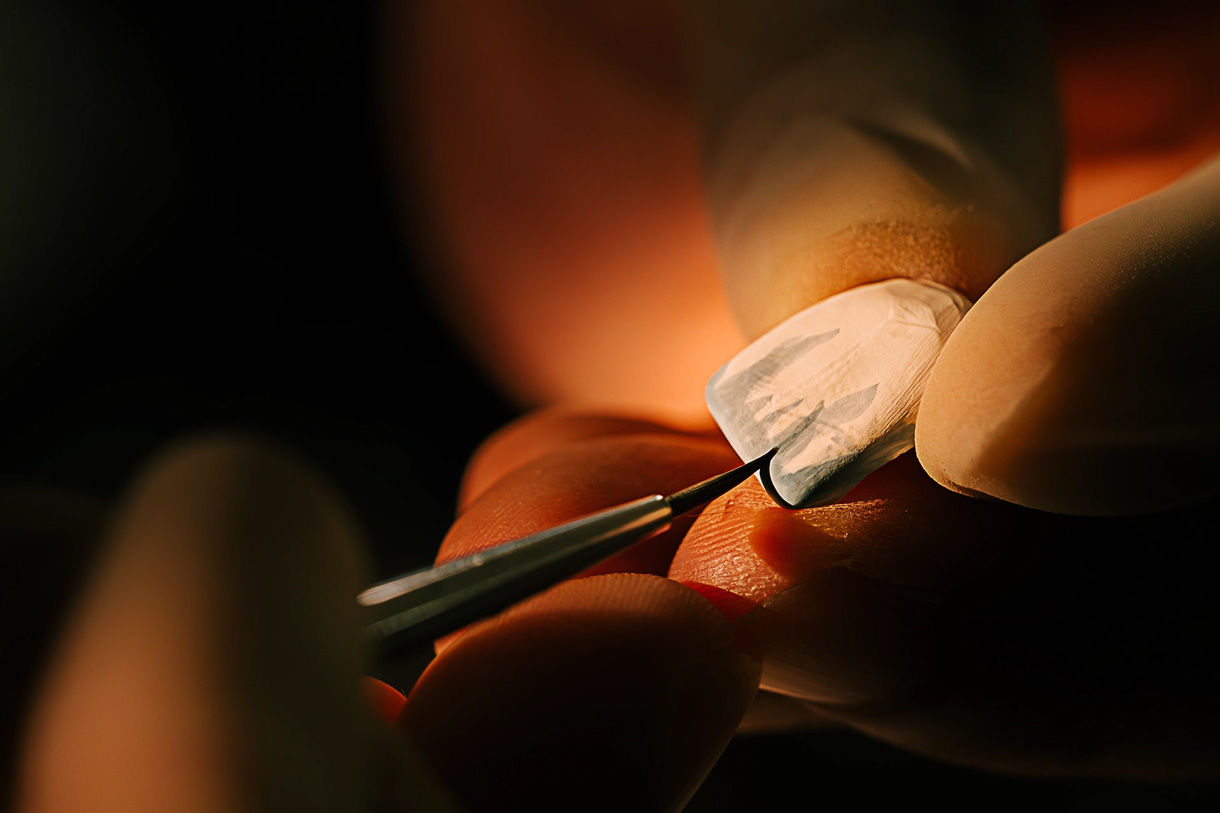
The biggest problem with traditional veneers is that the dentist usually has to grind down your perfectly healthy tooth enamel to make room for the ceramic shell. This irreversible process can cause lingering sensitivity and permanent structural damage. SmartVeneer completely bypasses this requirement.
The secret is ultra-pure Zirconia. Most premium veneers use glass-ceramics, which look great but lack extreme durability. SmartVeneer uses a highly refined Zirconia that removes heavy metals and potential radioactive elements. It is incredibly strong, testing between 900 and 1250 Megapascals. It resists heavy chewing, grinding, and accidental impacts. Because it is so strong, it can be milled to an ultra-thin profile of just 0.3 to 0.5 millimeters. That is about the thickness of a contact lens.
This ultra-thin profile allows for a strict protocol. There is no deep invasion, no pain, no need for local anesthesia, no prolonged sensitivity, and absolutely no grinding down the original tooth core.
To make sure the veneer stays permanently attached without grinding the tooth, SmartVeneer uses advanced micro-mechanical locking. The inside surface of the Zirconia is treated to create microscopic pores. When combined with high-performance dental adhesives, it locks onto your natural enamel and simply does not come off during normal use. The milling process itself uses a 5-axis CNC wet-cutting system, which prevents the micro-cracks that dry milling can cause. This ensures a perfect fit against the gum line, preventing bacteria buildup and bad breath. It can even cover up severe level-3 Tetracycline staining that normal glass veneers cannot hide.
Full mouth reconstruction
For patients missing all their teeth or dealing with terminal decay, All-on-4 or All-on-6 implant protocols are life-changing. The surgeon places four to six specialized titanium implants strategically into the jawbone, usually avoiding the need for complex bone grafts.
Vietnamese clinics excel at immediate loading. This means the surgical team can extract failing teeth, place the implants, and attach a fixed acrylic bridge all within 24 to 48 hours. You literally walk in with failing teeth and walk out the next day with a working smile.
Digital aesthetic crowns
If a tooth is severely damaged from deep decay or trauma, aesthetic crowns provide structural reinforcement. The global shift away from porcelain-fused-to-metal crowns is fully implemented in Vietnam. Metal crowns often leave an ugly dark line at the gum over time. Clinics here use metal-free, highly biocompatible all-ceramic and Zirconia restorations that look exactly like natural tooth enamel.
Exactly how much money you save
The math is what ultimately puts people on an airplane. Depending on where you live and what you need done, you can save anywhere from 50% to a staggering 80%. And yes, that includes the cost of your flights and hotel.
The savings do not come from cheap materials. They come from entirely different macroeconomic environments. Vietnam has significantly lower commercial real estate costs, optimized administrative expenses, and lower malpractice insurance premiums. The clinics pass those operational savings directly to you.
Here is a breakdown of the typical costs.
General cost comparison for popular services
Treatment | US, EU, AU Average Price | Vietnam Average Price |
Porcelain Veneers (per tooth) | $1,000 to $2,500+ | $250 to $400 |
Teeth Whitening (in-office) | $400 to $1,000 | $80 to $250 |
Cosmetic Bonding | $250 to $800 | $40 to $150 |
Same-Day Crown | $800 to $2,500 | $200 to $500 |
Full Smile Makeover | $10,000 to $60,000 | $2,500 to $10,000 |
Veneer cost breakdown by country
In places like the US or Australia, getting 10 veneers can easily cost as much as a luxury car.
Country | Composite Veneer (Per Tooth) | Premium Porcelain / Zirconia (Per Tooth) |
Vietnam | $80 to $150 USD | $250 to $400 USD |
Australia | $250 to $1,200 AUD | $1,200 to $3,000 AUD |
United States | $250 to $1,500 USD | $900 to $2,895 USD |
United Kingdom | No data available | £600 to £1,300 GBP |
Germany | No data available | €480 to €500 EUR |
The economic reality is stark. An Australian patient needing 8 veneers might pay up to 24,000 AUD at home. The exact same procedure at a top-tier clinic in Vietnam runs about 2,000 to 3,200 AUD. You save upwards of 14,000 AUD. When you choose the exclusive SmartVeneer through HealthGoVietnam, you are getting an ultra-premium product that would be priced astronomically in the West.
Single implant and crown costs
The markups on titanium hardware and custom crowns in Western healthcare are enormous. In the UK, pricing is often fragmented. You might see an implant advertised for £1,800, but they leave out the abutment and the crown, pushing the real total over £3,500. HealthGoVietnam partners operate on absolute transparency. The quote includes the surgery, the premium implant, the abutment, and the final Zirconia crown.
Country | Single Implant (Includes Crown) | Standalone Ceramic Crown |
|---|---|---|
Vietnam | $600 to $1,500 USD | $200 to $400 USD |
United States | $3,000 to $6,000 USD | $800 to $2,500 USD |
Australia | $3,500 to $7,500 AUD | $1,200 to $2,000 AUD |
United Kingdom | £1,800 to £4,500 GBP | £600 to £1,500 GBP |
France | €699 to €1,500 EUR | €570 EUR |
Germany | €920 to €1,200 EUR | €500 EUR |
Full arch reconstruction costs
This is the most expensive procedure in dentistry. In the US, an All-on-4 often forces people to pull from their retirement funds.
Country | All-on-4 Implant (Per Arch) | All-on-6 Implant (Per Arch) |
|---|---|---|
Vietnam | $5,000 to $8,000 USD | $6,500 to $10,000 USD |
United States | $15,000 to $30,000 USD | $20,000 to $40,000 USD |
Australia | $20,000 to $35,000 AUD | $25,000 to $40,000 AUD |
United Kingdom | £12,000 to £25,000 GBP | £15,000 to £30,000 GBP |
A bilateral All-on-4 (both upper and lower jaws) in the US regularly exceeds $50,000. In Vietnam, using the exact same Nobel Biocare or Straumann systems, the total rarely breaks $16,000. Saving $40,000 turns an impossible financial burden into an affordable reality.
The travel math
Let us look at the real bottom line. If you fly round-trip from Sydney to Ho Chi Minh City (about 1,400 AUD) and stay 10 nights in a nice hotel (about 900 AUD), plus food and transport, your logistics budget is around 2,800 AUD. Add your veneer treatment (3,200 AUD), and the entire medical vacation costs 6,000 AUD. You still put thousands of dollars back in your pocket compared to local prices, and you got a holiday out of it.
Logistics and global warranties
The final hurdle for most people is figuring out the timeline and wondering what happens if something goes wrong once they fly home. HealthGoVietnam streamlines the timeline to make sure you spend minimal time in a dental chair and maximum time enjoying your trip.
Timelines for treatment
If you are getting composite veneers, the dentist sculpts them directly onto your teeth. You can finish a full smile in a single one-day appointment.
For premium porcelain or Zirconia veneers, the on-site labs speed things up drastically. The process takes between 2 and 7 days. You do a consultation and digital mapping on day one. You wear temporary veneers for a few days while the lab mills your permanent ones. Around day five or seven, the permanent veneers are checked for fit and permanently bonded.
Implants require a bit more patience because of human biology. Your bone needs time to heal. This requires two trips. The first trip takes 7 to 10 days for the surgery and the placement of a temporary bridge. You fly home and wait 3 to 6 months for osseointegration, which is just the fancy term for your jawbone fusing to the titanium. HealthGoVietnam monitors your healing via video calls. Your second trip takes another 7 to 10 days to attach the permanent Zirconia teeth.
Flying safely after surgery
People always ask if it is safe to fly after oral surgery. The medical consensus is yes. You are usually cleared to fly 24 to 72 hours after the procedure. Titanium implants are solid metal. They do not have air pockets, so cabin pressure changes do not affect them at all. You might feel mild discomfort from the dry cabin air, so staying hydrated is important. If you had a major sinus lift, your surgeon might ask you to wait a week or two just to be incredibly cautious about sinus pressure, but standard procedures are perfectly fine for travel.
Warranties that actually travel with you
The fear of a failed restoration keeping you up at night is valid. What happens if a crown breaks when you are back in London?
Elite clinics handle this by using globally verified brands. A Straumann or Nobel Biocare implant carries a lifetime international warranty against manufacturing defects or structural fractures. That warranty is honored worldwide. Furthermore, the top Vietnamese clinics provide their own extended clinical warranties covering their workmanship. It is standard to see 10 to 20-year guarantees on Zirconia crowns, veneers, and full-arch bridges. SmartVeneer comes with strict guarantees regarding durability and bonding. If a material fails or a clinical error occurs within that window, the clinic repairs or replaces it at no extra medical cost.
You do not have to choose between going broke and having a healthy, confident smile. The world is smaller than it used to be. The technology is globally standardized, the doctors are highly trained, and the numbers clearly make sense. Reach out to HealthGoVietnam, send them a few photos, and see exactly what is possible.
