
It is hard to wrap your mind around the physical scale of a fetal heart at 24 weeks gestation. The entire organ is roughly the size of a green olive. The valves inside that heart are only a few millimeters wide. Now imagine trying to pass a surgical needle through a mother's abdomen, through the thick muscle of the uterine wall, directly into that tiny, beating chest, and inflating a balloon to open a blocked valve. It sounds impossible. But late last year, a surgical team in Ho Chi Minh City did exactly that.
On December 31, 2025, Tu Du Hospital announced a successful fetal cardiac intervention performed alongside specialists from Children's Hospital 1. They managed to treat a complex congenital heart defect while the baby was still in the womb. This was not an experimental trial. It was the first procedure of its kind carried out under the official approval of Vietnam's Ministry of Health for fetal cardiac interventions.
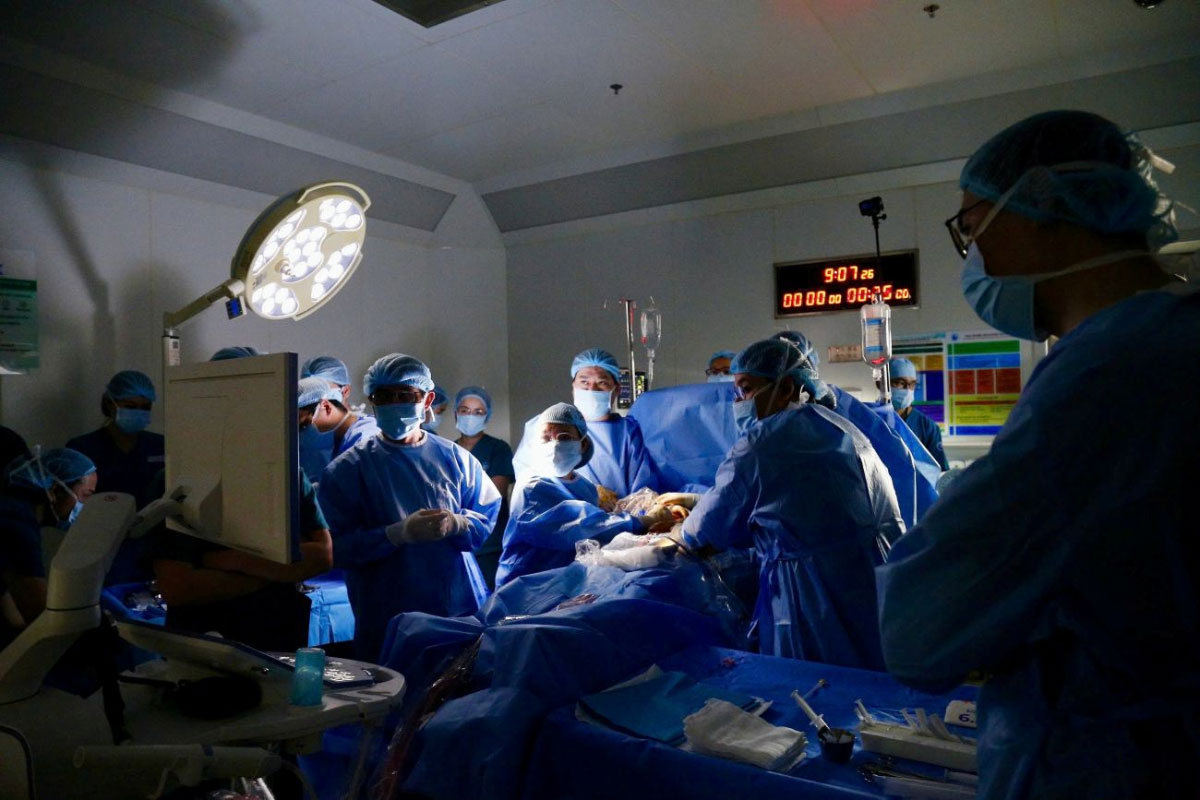
The success of fetal cardiac catheterization contributes to the standardization and development of specialized fetal medicine in Vietnam.
I find this case fascinating because it shows how far pediatric cardiology has come in Southeast Asia. This is no longer about managing terrible diagnoses after birth. It is about actively altering the physical development of a baby months before they take their first breath.
The anatomy of a failing heart
To understand why doctors would risk operating on a fetus, you have to understand what goes wrong in severe pulmonary valve stenosis.
The patient in this case is a 26-year-old mother from Ho Chi Minh City, identified in medical reports as N.T.T.T. This was her second pregnancy and everything started out fine. Her first-trimester scans were clear. Her non-invasive prenatal testing returned a low risk for genetic conditions. Prenatal anxiety usually drops after a clean genetic test, and it is easy to imagine the family feeling completely at ease.
But the mid-pregnancy anatomy scans between week 22 and 24 revealed a massive structural problem. The ultrasound showed that the baby's pulmonary valve was critically narrowed.
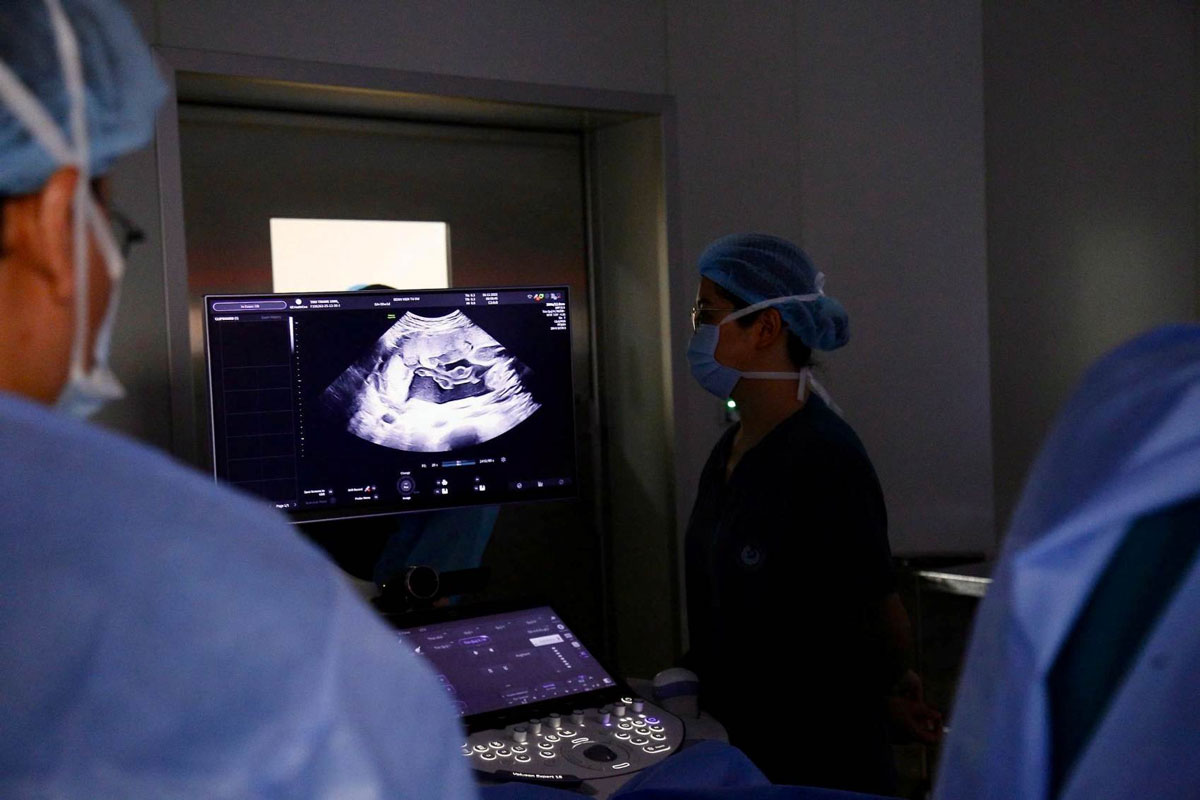
Doctors perform fetal cardiac catheterization.
A normal heart relies on four chambers to move blood efficiently. The right ventricle pumps oxygen-poor blood through the pulmonary valve and into the lungs. If that valve is fused shut or severely narrowed, the right ventricle has to push against a literal wall.
In a developing fetus, this creates a catastrophic chain reaction. Blood cannot pump forward, so it leaks backward. The baby developed tricuspid valve regurgitation, meaning blood was washing back into the right atrium. Because the right ventricle could not pump effectively, it started to lose its purpose. Muscle that does not work properly stops growing. The baby was developing progressive right ventricular hypoplasia. The right side of the heart was shrinking.
The single ventricle threat
If left alone until birth, this baby was heading straight for a single ventricle physiology. That is a brutal diagnosis for a family to face.
A single ventricle heart means the child only has one working pumping chamber to handle the body's entire blood supply. Fixing it requires a grueling series of open-heart surgeries spanning the first few years of life. Surgeons have to essentially replumb the child's entire circulatory system so that blood bypasses the right side of the heart completely. The final step is usually the Fontan procedure.
While the Fontan pathway saves lives, it is a hard life. Children often face chronic complications, liver issues, and a reduced life expectancy.
The medical teams at Tu Du Hospital and Children's Hospital 1 recognized the trajectory. An amniocentesis confirmed the baby had a normal chromosomal profile. This was a purely mechanical plumbing issue, not a complex genetic syndrome. That gave them the green light to attempt a mechanical fix.
Two hospitals, one needle
Fetal surgery requires an intense level of collaboration. You cannot just put a pregnant woman to sleep and have a single surgeon work. You need maternal-fetal medicine experts to manage the mother and the uterus. You need pediatric cardiologists to map the baby's tiny heart on ultrasound. And you need interventional cardiologists to actually thread the needle.
The goal was straightforward in theory. If they could force the pulmonary valve open while the baby was still in the womb, blood would start flowing normally again. The right ventricle would have a reason to pump. It would have a reason to grow.
But the environment inside the womb was incredibly hostile to a surgical approach.
The fetus was in a cephalic presentation, meaning head down, and leaning to the left. The placenta was attached to the front of the uterus. This anterior placenta drastically limited the safe entry points for the surgical team. A surgeon cannot simply punch a large needle through a highly vascular organ like the placenta without risking catastrophic bleeding for the mother and the baby. They had to find a clear window.
Moving a tiny arm in the dark
As the doctors used high-resolution ultrasound to map out their needle trajectory, they hit another roadblock. The baby's arm was resting directly across the chest. It completely blocked the path to the right ventricle.
Medicine at this level requires high-tech precision, but it also requires weirdly practical solutions. The team could not just wait for the baby to wake up and stretch. They had to intervene physically from the outside. The surgical team performed a gentle physical manipulation on the mother's abdomen, coaxing the baby's limb out of the way to clear the path.
Once the arm was moved, the execution had to be flawless. The surgeon guided a needle through the mother's abdomen, into the amniotic sac, and straight into the fetal chest. They reached the exact right spot in the heart on the first attempt. A tiny wire and balloon were threaded through the needle and into the stiff pulmonary valve.
With a quick inflation, the balloon forced the valve open. The needle was withdrawn. The team confirmed the blood was flowing properly. The entire invasive portion of the procedure was over fast, minimizing the stress on the fetus.
The physiology of recovery
This single balloon inflation fundamentally changes the math for the rest of the pregnancy.
By restoring blood flow, the right ventricle has been put back to work. It has the remaining months of the pregnancy to catch up in size and muscle tone. The medical team at Tu Du expects this will allow the baby to achieve a biventricular circulation after birth. That means a heart with two working pumps.
Even if the right ventricle does not grow perfectly, they might only need a one and a half ventricle repair. Either outcome is vastly superior to the single ventricle nightmare the family was originally facing. The child is spared a lifetime of palliative heart surgeries because a team decided to act early.
A turning point for Vietnamese healthcare
The success of this fetal cardiac intervention tells us a lot about the current state of healthcare in Vietnam.
Fetal cardiology is a rare specialty. Only a small number of medical centers in North America, Europe, and select parts of Asia have the institutional skill to perform these interventions routinely. For Tu Du Hospital and Children's Hospital 1 to pull this off under the newly approved Ministry of Health guidelines shows a serious maturation of their surgical and diagnostic capabilities.
Ho Chi Minh City is establishing itself as a legitimate hub for advanced prenatal care in Southeast Asia. Parents dealing with complex congenital heart disease diagnoses often feel forced to look abroad for experimental or highly specialized treatments. This case proves that the local medical infrastructure can handle the highest tiers of maternal-fetal intervention.
The coordination between an obstetrics hospital and a pediatric hospital is exactly how modern medical systems are supposed to work. You combine the experts who know the womb with the experts who know the heart.
Looking at the bigger picture
We talk a lot about medical innovation in abstract terms. We focus on new hospital wings or updated government health policies. But cases like this ground those concepts in reality.
I keep thinking about the sheer technical nerve it takes to look at an ultrasound screen, calculate the depth of amniotic fluid, navigate around an anterior placenta, and slide a needle into an organ the size of an olive. I am glad the Ministry of Health formally added fetal heart interventions to their approved technical list. It gives doctors the legal and professional cover to take these calculated risks.
A 26-year-old mother went to a routine anatomy scan and got the worst news imaginable. Because of the surgical team in Ho Chi Minh City, she gets to finish her pregnancy knowing her baby's heart is actually healing itself in the dark. The plumbing works again. The muscle is growing.
That is not just a technical victory. It is good medicine.